Warrior’s Heart Blog
Stories and guidance for families moving from striving to thriving.
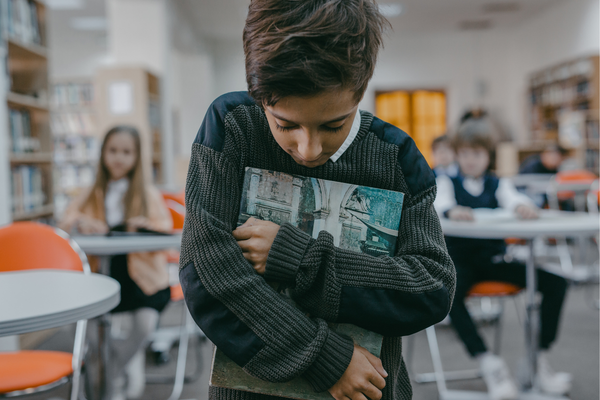
When Your Child Doesn’t Feel Safe at School
School may be out for the summer, but for many families, the anxiety caused by bullying doesn’t simply disappear when the school year ends.
If your child has been bullied, you already know this. The worry doesn’t follow the school calendar. It shows up at bedtime, in the stomachaches, in school refusal, in lowered self-esteem, in a child who has grown quiet.
You’re not overreacting. And you aren’t alone.

I wish we didn't need a guide like this
I believe children deserve to go to school and feel safe. And I believe parents deserve to know their child is protected, heard, and supported, without having to fight so hard for it.
But when bullying happens, families need clear steps. Steps that help children feel safer, and help parents know they are doing everything they can to protect their child.
Why this isn't just "kids" being kids
It’s easy for others to call this “kids being kids.” But the research tells a more difficult story, one compelling enough to stop even the most ardent naysayer.
A five-decade British study followed 7,771 children into adulthood. It found that 28% had been bullied occasionally and 15% had been bullied frequently. Decades later, at age 50, the adults who had been bullied were more likely to have poorer physical and psychological health. Those who were bullied frequently had a higher risk of depression, anxiety, and suicidal thoughts.
I don’t share this to frighten you. I share it because you may already feel it in your gut, and your instincts deserve to be taken seriously.
When a child doesn’t feel safe, it matters now. And for some children, it can matter for years to come.
Families are carrying a lot
You may be staying up late, reading school policies you never thought you’d need to understand. Your child may be carrying anxiety, confusion, and hurt that is far too heavy for them.And you may be tired, the kind of tired that comes from asking for help again and again, while your child still isn’t safe.
At Healing Complex Kids, we see this every day. That’s why we created tools to help families document, prepare, and take the next right step, so you don’t have to start from nothing.
Bullying happens more often than many people realize. And when a child has anxiety, a disability, a learning challenge, an IEP, or a 504 Plan, bullying can affect far more than their social life.
It can affect their sleep. Their attendance. Their grades. Their behavior. Their emotional health. Their ability to feel safe at school. Their ability to access their education.
The most important thing you can do
Write it down.
It is simple, but it changes everything. Start a bullying log. For each incident, write down:
The date and time.
Where it happened.
What was said ordone.
Who was involved, and whether there were witnesses.
Which adult you told, and how the school responded.
How your child was affected afterward.
Also save anything that helps show what’s been happening:
Screenshots of texts, messages, emails, or social media posts.
Photos of injuries, damaged property, or written notes.
Records of nurse visits, attendance, behavior reports, or grade changes.
Your own notes about anxiety, sleep changes, meltdowns, regression, or school refusal.
This is not the time to rely on phone calls and hallway conversations alone. Put your concerns in writing. Send emails. Ask clear questions. Request written responses. Keep your own notes. Build a paper trail.

Ask the school for a safety plan
Your child deserves to feel safe throughout the whole school day, including the classroom, the hallways, the lunchroom, the bathroom, the playground, the bus, and anywhere else bullying maybe happening.
If your school uses restorative justice, ask questions before agreeing to anything. Restorative practices must not place the emotional burden on the child who was harmed. Your child does not need to forgive, explain their pain, take part in a meeting, or help repair the situation before the school has made sure they are safe.
You can say:
“My child is not available for a restorative meeting at this time. Our first priority is safety.”

If your child has an IEP or 504 Plan
If bullying is affecting their attendance, anxiety, behavior, learning, grades, services, or ability to feel safe at school, you can request a team meeting. And you can ask the team directly:
“Is the bullying affecting my child’s ability to access their education?”
That question matters. Because when bullying interferes with a child’s ability to learn,participate, attend school, receive services, or feel safe, it needs to be treated as more than a peer conflict.
If the response doesn't match what your child is going through
Sometimes you do everything right and the school still falls short. If the bullying continues, you have more options than you might think. You can:
Ask for the district bullying policy.
File a written complaint.
Contact the district 504 coordinator or the special education director.
Request another IEP or 504 meeting.
Speak with a special education advocate or attorney for more support.
You don’t have to figure this out alone.
We made a checklist to help
We created our free Bullying Parent Action Checklist to help families know what to document, what to ask, and what steps to consider when bullying is affecting their child.
If your child has been bullied, or if you know a family walking through this, sign up below and we’ll send you the free checklist.
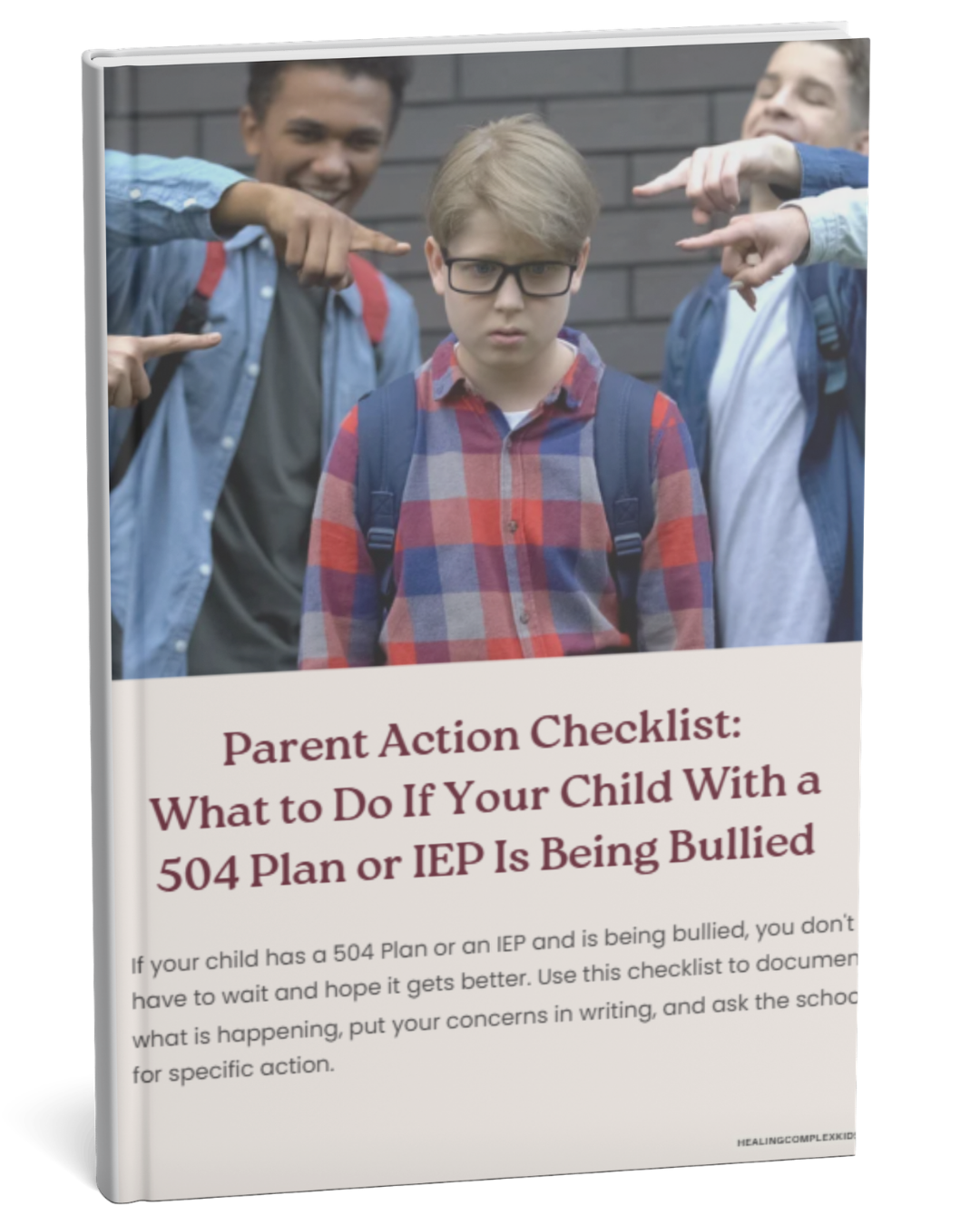
Get the Free Bullying Parent Action Checklist
We’re also sharing a June bullying series on Facebook and Instagram, with short, practical steps families can use when bullying affects their child’s safety, anxiety, attendance, or learning. Follow Healing Complex Kids on both for support throughout the series.
Because when your child is being bullied, you don’t need vague reassurance.
You need a plan, and you don’t have to do this alone.
Reference: Takizawa, R., Maughan, B., & Arseneault, L. (2014). Adult Health Outcomes of Childhood Bullying Victimization: EvidenceFroma Five-Decade Longitudinal British Birth Cohort. American Journal of Psychiatry.
This information is educational and meant to help families prepare. It does not replace advice from an attorney, advocate, medical provider, therapist, or other qualified professional when your situation requires it.

Families raising children with complex needs are often carrying more than most people see.
Warrior’s Heart is where Healing Complex Kids shares encouragement, education, lived experience, and practical guidance for parents who are working hard every day to help their families heal, grow, and move forward.


© Copyright 2026. Healing Complex Kids. All Rights Reserved.